Why an EOB is not a bill
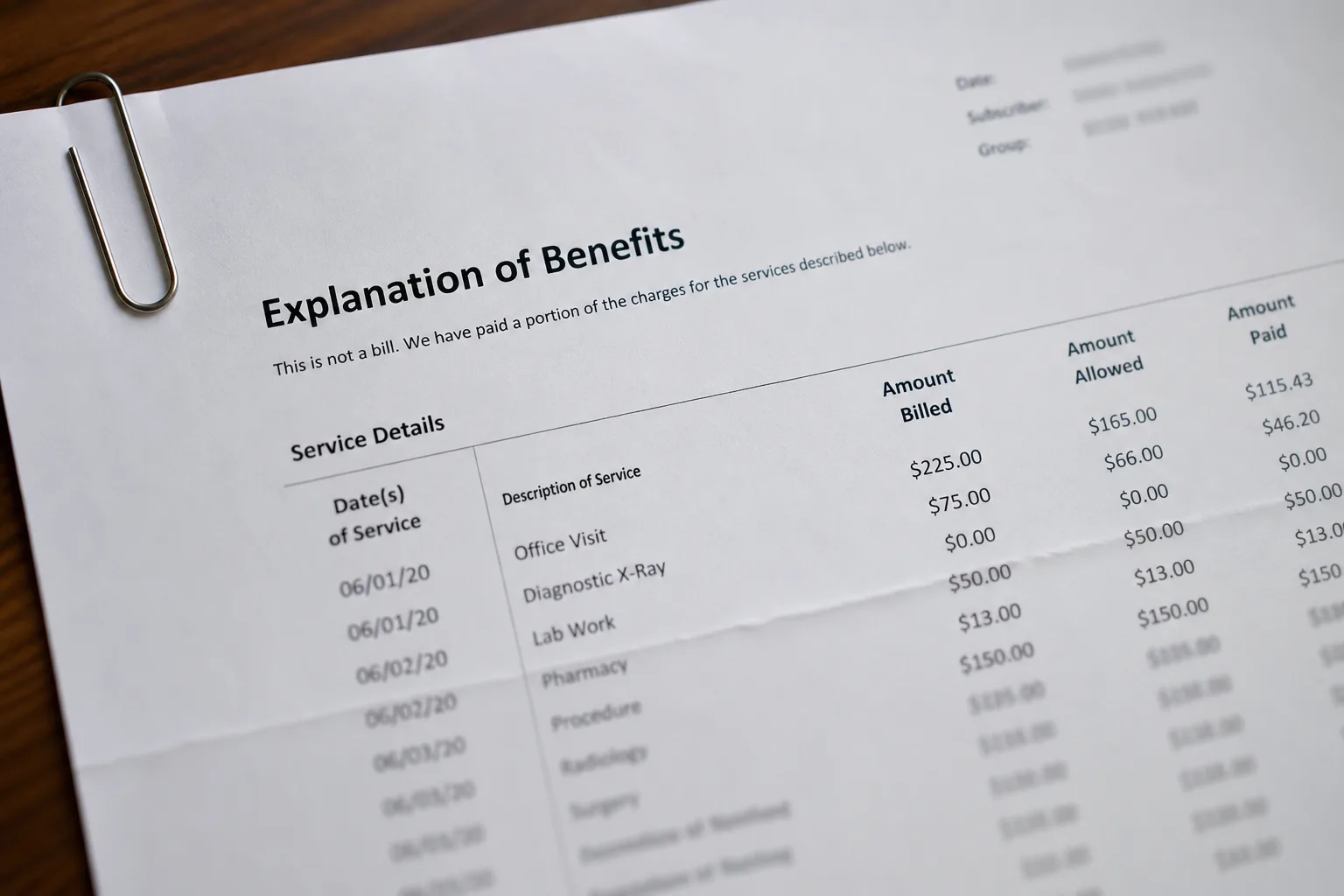
An Explanation of Benefits (EOB) is the plan’s account of a processed claim: what was billed, what the plan allowed, what it paid, and what it calculates you may owe. A bill is a request from a provider to send payment. They can arrive in the same week and still be different documents.
What each paper is for
The EOB is the plan’s ledger. It is used to see how a claim was processed and to start a question or an appeal about that processing. The bill is the provider’s request for money. You pay a bill. You review or dispute a line on an EOB.
The usual mix-up
Treating the EOB as an invoice can send a payment to the wrong place, or leave a real balance unpaid because “insurance already handled it.” The EOB can be wrong. So can the bill. When dates, codes, or the “you owe” amount do not match, ask the provider which claim number they billed and ask the plan what it posted. Do not decide from the envelope alone.
Advantage is not a Supplement
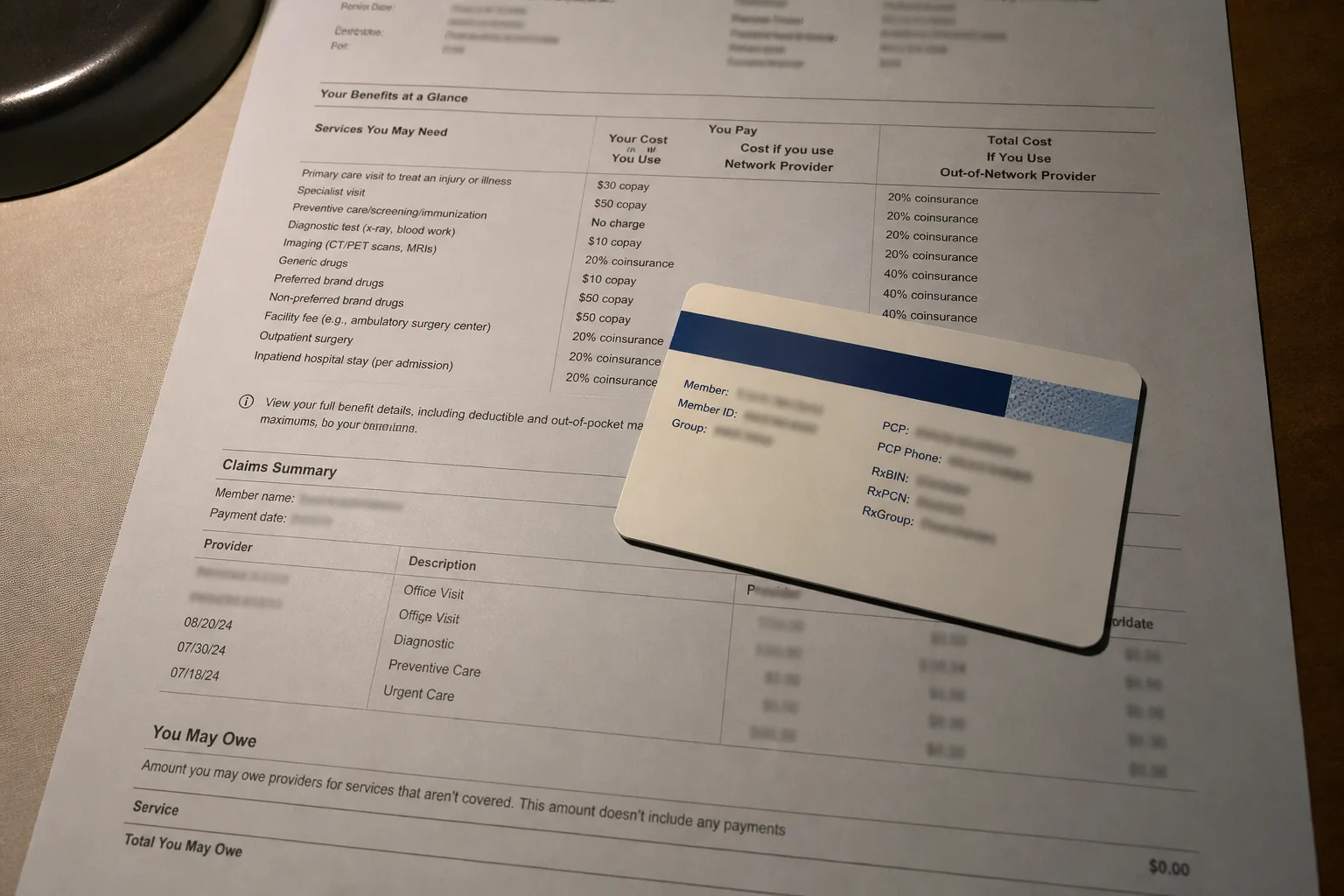
Medicare Advantage (Part C) is a private plan that pays Part A and Part B claims in place of Original Medicare. A Medicare Supplement (Medigap) is a separate policy that helps with cost sharing on Original Medicare. They are not two names for the same coverage.
A Supplement is not designed to sit on top of an Advantage plan. Networks, referrals, and prior authorization are written into the Advantage contract. A Supplement follows Original Medicare’s payment rules and then covers some of the remaining cost sharing. It does not build a clinic network the same way an Advantage plan does.

Prior authorization and appeals
Prior authorization is the plan’s decision before a service, a stay, or a drug. It is not a payment. An approval can still leave cost sharing. A denial starts the plan’s appeal process.
An appeal asks the plan to review its own decision. The first step is usually an internal reconsideration. Later steps can go to an independent reviewer. The EOB or the denial letter is the document that starts that timeline. A phone call does not replace the written request the plan’s rules name.
What to read
On the EOB, read the claim number, the date of service, the allowed amount, and the patient-responsibility line. On the bill, read the same claim number and the amount due. If Advantage or Supplement is in question, read the plan type on the card and the policy name on the contract — they are separate products.
Educational only · Not medical, insurance, or legal advice