Why Medicare and Medicaid are not the same program
Medicare and Medicaid share a few letters and are both health coverage. They are not the same program. Medicare is federal health insurance for people 65 and older, some younger people with disabilities, and people with certain diagnoses such as end-stage renal disease. Medicaid is a joint federal-state program that uses income and other need rules. Each state runs its own Medicaid program inside federal rules.

What each program is
Medicare is an insurance program with labeled parts. Part A and Part B are Original Medicare. Part C is Advantage. Part D is the drug benefit. Eligibility is mainly about age, disability, or a qualifying diagnosis — not a state income test.
Medicaid eligibility is about income, household, and other state rules such as age, disability, pregnancy, or being a child. Benefits and the application are state-specific. A Medicaid card names that state program. It is not a Medicare card.

When a person has both
A person can be enrolled in Medicare and Medicaid at the same time. That is often called dual eligibility. The two programs still keep separate cards, separate member IDs, and separate rules.
For a dual-eligible person, Medicare usually pays first as the primary coverage on a Medicare-covered service. Medicaid may then pay leftover cost sharing, or cover services Medicare does not, if the state plan includes them. That second payment does not turn Medicaid into Medicare, and it does not turn a Medicare Advantage plan into a Medicaid managed-care plan.
The usual mix-up
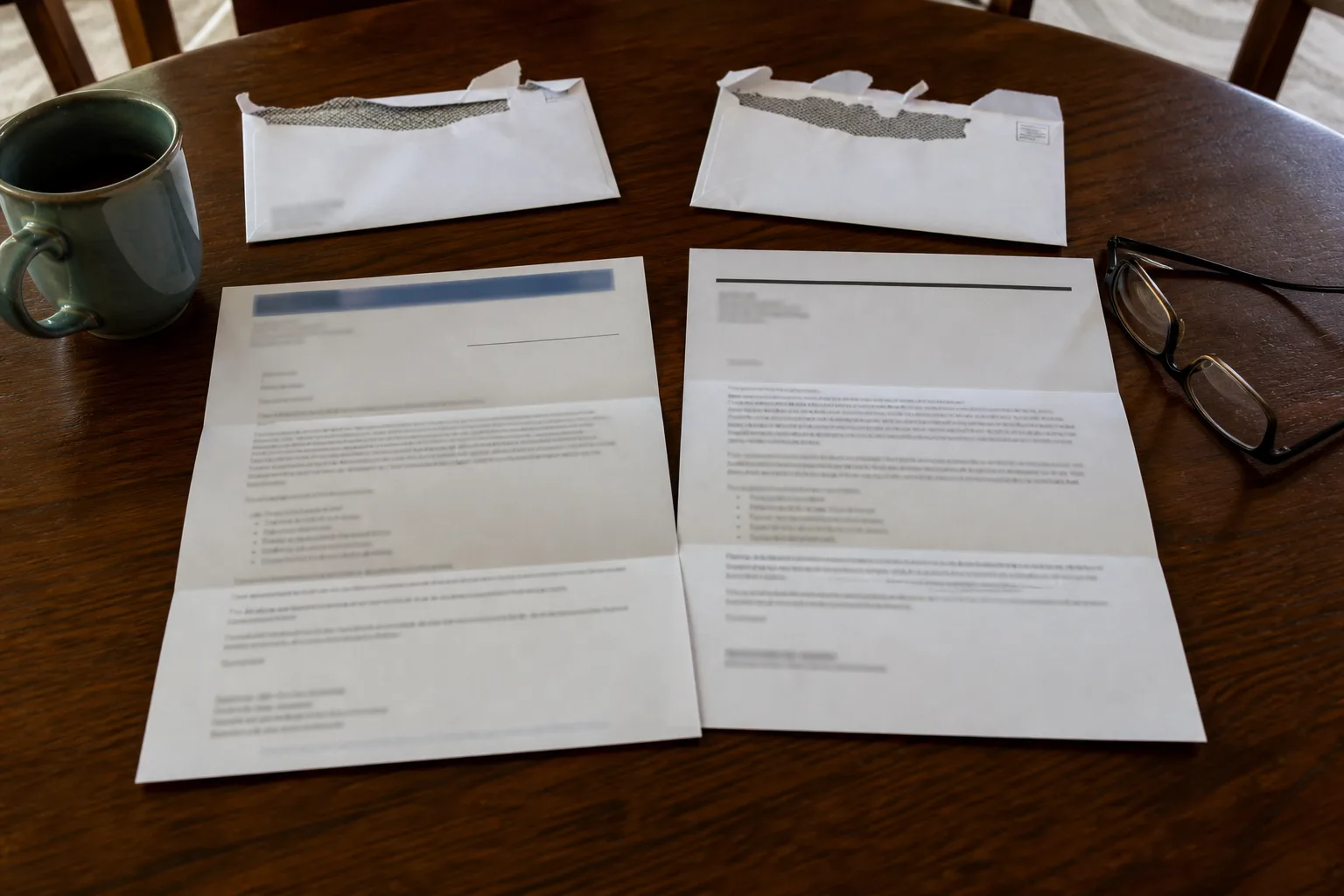
People treat the names as interchangeable, or treat one card as proof of the other program. A red, white, and blue Medicare card does not enroll someone in Medicaid. A state Medicaid card does not create Part A or Part B. A clinic that asks “do you have Medicare or Medicaid?” is asking which contract it should bill — sometimes the answer is both.
Enrollment windows also differ. Medicare Open Enrollment changes Advantage or Part D. Medicaid uses the state’s application and renewal process. A fall Medicare letter does not renew Medicaid.
What to read on the document
On each card, read the program name and the member ID. On a bill or explanation of benefits, read which payer is listed as primary and which is listed as secondary. If both programs are involved, keep both cards and both notices. Ask the clinic which ID it billed, then match that ID to the letter that arrived from that program.
Educational only · Not medical, insurance, or legal advice